‘Good cholesterol’ may protect liver (Links to an external site)

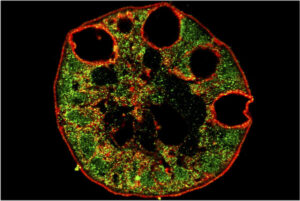
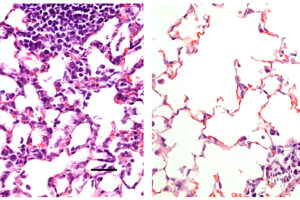
The body’s so-called good cholesterol maybe even better than we realize. New research from Washington University School of Medicine in St. Louis suggests that one type of high-density lipoprotein (HDL) has a previously unknown role in protecting the liver from injury. This HDL protects the liver by blocking inflammatory signals produced by common gut bacteria.

New snack foods nurture healthy gut microbiome (Links to an external site)

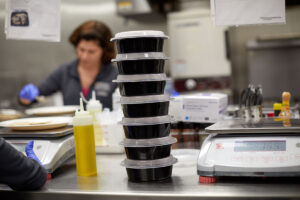
Researchers at Washington University School of Medicine in St. Louis have identified ingredients for snack food prototypes that have been formulated to deliberately change the gut microbiome in ways that can be linked to health. Translating results from animal models, the scientists have shown in two pilot human studies of overweight participants that snacks containing […]

Ashbel Smith Distinguished Alumnus Awards Announced

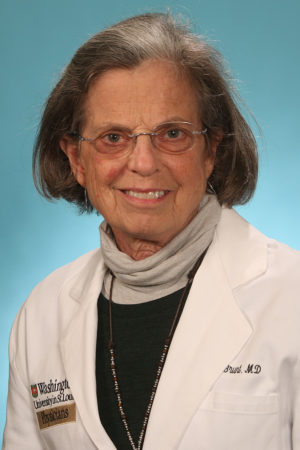
The University of Texas Medical Branch recently announced the recipients of the annual Ashbel Smith Distinguished Alumnus (ASDA) Awards. Dr. Elizabeth Brunt was among those receiving this distinguished honor. The Ashbel Smith Distinguished Alumnus (ASDA) Award is the highest alumni honor bestowed by the University of Texas School of Medicine Alumni Association. The award recognizes outstanding service to […]

Ravichandran named BJC investigator (Links to an external site)

Kodi S. Ravichandran, PhD, a world leader in understanding innate immunity, has been named a BJC Investigator as well as director of the Division of Immunobiology in the Department of Pathology & Immunology at Washington University School of Medicine in St. Louis.

Division Chief Receives Award from American Association of Neuropathologists

Robert Schmidt, MD, PhD, Division Chief of Neuropathology recently received the Meritorious Contributions to Neuropathology Award. This award recognizes a member who has made significant contributions to the advancement of knowledge in neuropathology and provided service to the American Association of Neuropathologists. Dr. Schmidt’s achievements are plentiful and include mentoring graduate students and post-doctoral fellows, […]

Good news: Mild COVID-19 induces lasting antibody protection (Links to an external site)

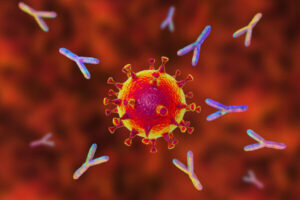
Months after recovering from mild cases of COVID-19, people still have immune cells in their body pumping out antibodies against the virus that causes COVID-19, according to a study from researchers at Washington University School of Medicine in St. Louis. Such cells could persist for a lifetime, churning out antibodies all the while.

Trainee Research Day Award Winners 2021

On Monday, May 10, the culmination of weeks of work for this year’s Trainee Research Day (TRD) was presented via Zoom. Continuing on this year with virtual presentations the department had 16 excellent studies presented. As per tradition, the TRD committee had a scoring process to select the best presentations. Talks were scored based on […]

SARS-CoV-2 Mutations Can Reduce Diagnostic Test Accuracy

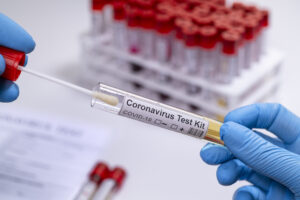
David Wang, PhD and Bijal Parikh, MD, PhD have identified a mutation that reduces the ability of reverse transcriptase PCR (RT-PCR) to identify SARS-CoV-2. The research was recently published in the Journal of Clinical Microbiology. The efficacy and reliability of these assays are of paramount importance in both tracking and controlling the spread of the […]

Faculty Member Receives AACC Academy Designation

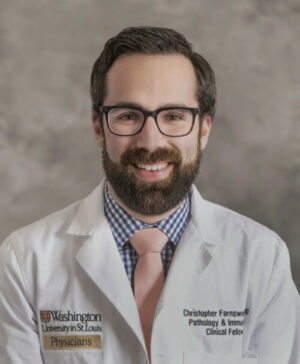
The American Association of Clinical Chemistry has awarded Chris Farnsworth, PhD the George Grannis Award for Excellence in Research and Scientific Publication. Dr. Farnsworth is one of several 2021 AACC and AACC Academy Awards recipients. The Grannis Award recognizes scientific and research excellence by clinical chemistry students and trainees. Click here for more information about […]

Gordon receives Kober Medal (Links to an external site)

Jeffrey I. Gordon, MD, has been awarded the George M. Kober Medal from the Association of American Physicians in recognition of his outstanding contributions to the field of gut microbiome research. Gordon, director of the Edison Family Center for Genome Sciences & Systems Biology at Washington University School of Medicine in St. Louis, is considered to be […]

Faculty Member Profile Feature in AACC Clinical Chemistry

Ann Gronowski, PhD joins a growing list of pathologists from the Washington University School of Medicine to be featured in the latest issue of Clinical Chemistry, a journal produced by The American Academy for Clinical Chemistry. The story features an in-depth look at the span of Dr. Gronowski’s career as a pathologist, the challenges she […]

Zika virus helps destroy deadly brain cancer in mice (Links to an external site)

The Zika virus that ravaged the Americas, leaving many babies with permanent brain damage, may have a silver lining. The virus can activate immune cells to destroy an aggressive brain cancer in mice, giving a powerful boost to an immunotherapy drug and sparking long-lasting immunological memory that can ward off tumor recurrence for at least […]

Welcome New Residents & Fellows

The Department of Pathology & Immunology is excited to welcome our newest residents and fellows. For every graduating medical student, Match Day is the next step in their career to working as a doctor and we are thrilled that these residents and fellows have chosen our department to continue their training. Click here to meet […]

COVID-19 can kill heart muscle cells, interfere with contraction (Links to an external site)

Since early in the pandemic, COVID-19 has been associated with heart problems, including reduced ability to pump blood and abnormal heart rhythms. But it’s been an open question whether these problems are caused by the virus infecting the heart, or an inflammatory response to viral infection elsewhere in the body. Such details have implications for […]

The Body Is Far From Helpless Against Coronavirus Variants (Links to an external site)
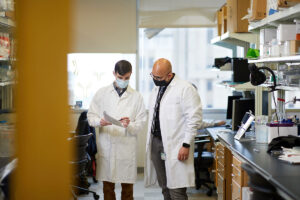
To locate some of the world’s most superpowered cells, look no further than the human immune system. The mission of these hometown heroes is threefold: Memorize the features of dangerous microbes that breach the body’s barriers. Launch an attack to bring them to heel. Then squirrel away intel to quash future assaults.

How does the immune system keep tabs on the brain? (Links to an external site)

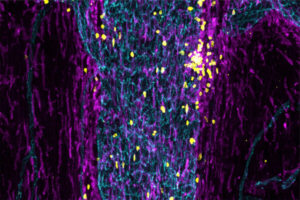
Alzheimer’s disease, multiple sclerosis, autism, schizophrenia and many other neurological and psychiatric conditions have been linked to inflammation in the brain. There’s growing evidence that immune cells and molecules play a key role in normal brain development and function as well. But at the core of the burgeoning field of neuroimmunology lies a mystery: How […]

Bateman, Diamond, Hultgren named to National Academy of Inventors (Links to an external site)
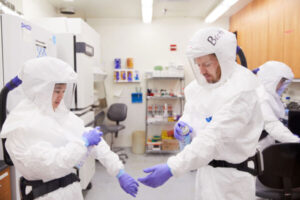
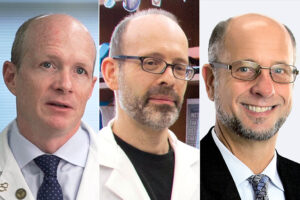
Neurologist Randall J. Bateman, MD, virologist and immunologist Michael S. Diamond, MD, PhD, and microbiologist Scott Hultgren, PhD – all faculty members at Washington University School of Medicine in St. Louis – have been named fellows of the National Academy of Inventors, the highest professional distinction accorded solely to academic inventors.

Lethal brain infections in mice thwarted by decoy molecule (Links to an external site)

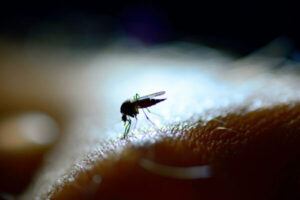
Researchers at Washington University School of Medicine in St. Louis have identified a molecule that protects mice from brain infections caused by Venezuelan equine encephalitis virus (VEEV), a mosquito-borne virus notorious for causing fast-spreading, deadly outbreaks in Mexico, Central America and northern South America. As the climate changes, the virus is likely to expand its […]

Duncavage and Heusel to Lead Two New Department Sections

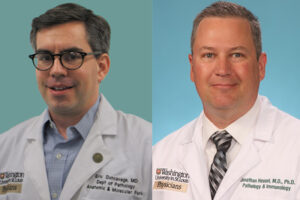
In an effort to enhance clinical genomic services at Washington University School of Medicine, the Department of Pathology & Immunology is pleased to announce the formation of two new sections; Clinical Cancer Genomics and Constitutional Genomics. Eric Duncavage, MD will serve as the inaugural head of Clinical Cancer Genomics and Jonathon Heusel, MD, PhD will […]

New discovery could help improve cancer vaccines (Links to an external site)
Cancer vaccines have shown promise in treating certain tumors, such as melanoma. But such vaccines have limitations. They often target normal proteins that may be more abundant in the tumor but also are present in healthy tissue, which can lead to off-target effects that cause autoimmune disorders and also reduce the effectiveness of the vaccines

Brian Edelson, MD, PhD Recognized for Contributions in Education

Brian Edelson, MD, PhD was recently inducted into the Washington University School of Medicine Academy of Educators. The ceremony was held on September 24 to coincide with Education Day sponsored by the School of Medicine. Edelson was acknowledged for his important and varied contributions to our ongoing educational programs, and roles in building the new Gateway Curriculum.  To be selected […]

Antibodies protect against wide range of influenza B virus strains (Links to an external site)
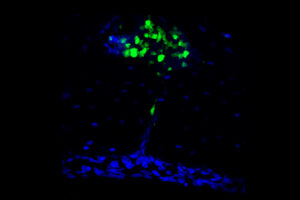
Researchers have identified two antibodies that protect mice against lethal infections of influenza B virus, report scientists at Washington University School of Medicine in St. Louis and Icahn School of Medicine at Mount Sinai. Together with an antibody that targets the other major kind of influenza viruses that infect people — influenza A — these […]

Immune system affects mind and body, study indicates (Links to an external site)

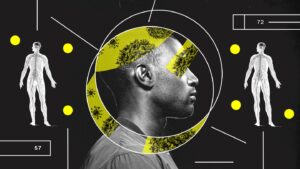
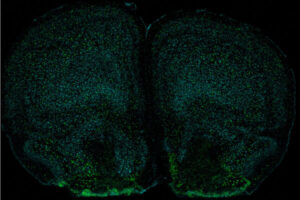
New research at Washington University School of Medicine in St. Louis helps illuminate a surprising mind-body connection. In mice, the researchers found that immune cells surrounding the brain produce a molecule that is then absorbed by neurons in the brain, where it appears to be necessary for normal behavior.

Washington University develops COVID-19 saliva test (Links to an external site)

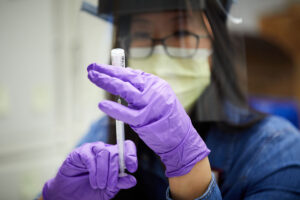
A new saliva test to detect the SARS-CoV-2 virus has been developed by researchers at Washington University School of Medicine in St. Louis. Results from the COVID-19 diagnostic test are available in a few hours and, ideally, able to be communicated to people tested within a day. Highly sensitive to detecting even tiny levels of […]

Nasal vaccine against COVID-19 prevents infection in mice (Links to an external site)
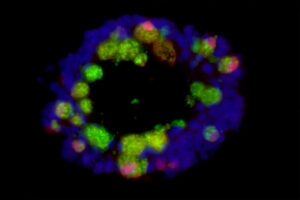
Scientists at Washington University School of Medicine in St. Louis have developed a vaccine that targets the SARS-CoV-2 virus, can be given in one dose via the nose and is effective in preventing infection in mice susceptible to the novel coronavirus. The investigators next plan to test the vaccine in nonhuman primates and humans to […]

New center to explore brain, immune system connections (Links to an external site)
As the brain reigns supreme over the human body, the immune system works 24/7 to defend the body from foreign invaders. For decades, however, the brain and the immune system were thought to operate independently of one another. But a growing body of evidence suggests the two are intimately connected in keeping the body healthy.

ASCP’s 40 Under Forty List Includes P&I Faculty Member

The American Society for Clinical Pathology has named Suzie Thibodeaux as one of 40 high-achieving pathologists, pathology residents, and medical laboratory professionals under age 40. She joins many other pathology professionals on the prestigious 2020 ASCP 40 Under Forty list. “Being recognized by the ASCP in their 40 under forty list is an amazing honor. […]