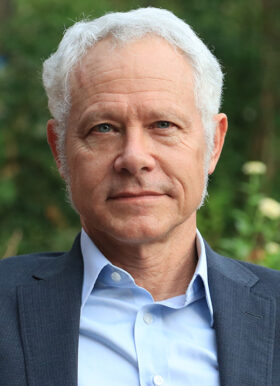
Kenneth Murphy, MD, PhD
Eugene Opie First Centennial Professor, Pathology & Immunology
Contact
- Email: kmurphy@wustl.edu
- Phone: 314-362-2009
Division: Immunobiology
Education
BA, Summa Cum Laude, Chemistry: Rice University, Houston, TX (1978)
MD, PhD: Johns Hopkins University School of Medicine, Baltimore, MD (1984)
Resident-in-Training, Department of Pathology: Washington University, Barnes Hospital, St. Louis, MO (1988)
Chief Resident, Anatomic Pathology: Washington University, St. Louis, MO (1998)
Postdoctoral Training (with Dennis Y. Loh): Washington University, St. Louis, MO (1990)
Recognition
1975-1977: Board of Governors Scholar, Rice University, Houston, TX
1977: Phi Beta Kappa
1978: B.A. Summa Cum Laude, Rice University, Houston, TX
1978: Z.W. Salsburg Memorial Award, Department of Chemistry, Rice University, Houston, TX
1978-1984: Medical Scientist Training Program Award, Johns Hopkins University School of Medicine, Baltimore, MD
1984: D.I. Macht Memorial Prize, Johns Hopkins University School of Medicine, Baltimore, Maryland
1988-1990: Juvenile Diabetes Foundation Career Development Award
2009: Distinguished Investigator Award, Washington University School of Medicine
2012: William B. Coley Award for Distinguished Research in Basic Immunology, Cancer Research Institute
2016: AAI-Thermo Fisher Meritorious Career Award, Thermo Fisher Scientific
2016: National Academy of Sciences
Editorial Responsibilities
2016-Present
Executive Committee, Senior Editorial Board
European Journal of Immunology
2005-Present Lead Author,
Janeway’s Immunobiology, Garland Science
2001-Present, Transmitting Editor,
International Immunology
2001-Present Editorial Board,
European Journal of Immunology
Service to the Department
2015-Present Center for Human Immunology and Immunotherapy Program (CHiiPs) Member
2015-Present Inaugural Siteman Investment Program Review Committee
2011 – 2012, Course master, Immunobiology I 5052 & Immunobiology II 5053
2010 – 2013 Animal Studies Committee
2009 – Present Selection Committee for Faculty Affairs
2009 – 2011 Course master, Lymphoid Organogenesis Immunology 5161
2008 – Present DBBS Evaluation Committee, Pathology and Immunology
2008 – Present Faculty Search Committee, Immunobiology
2008 – 2011 Cell Biology Search Committee
2003 – 2012, Course Master, Foundations Immunology 5051
2000 – 2007 Barnes Hospital Medical Staff, Department of Pathology
2000 – Present, Immunology Student Admissions Committee
1997 – 2000,
American Association of Immunologist Nominating Committee
1992 – Present
Speaker Committee, Pathology and Immunology
1992 – Present
Steering Committee, Immunology Program
1992 – Present
DBBS Admissions Committee
1992 – 1995
Graduate School Admissions Committee
Service to the University
1997 – Present
Investigator, Howard Hughes Medical Institute
DBBS Affiliations
DBBS Admissions Committee (1992-Present)
Director, DBBS Immunology Program (2008-2012)
DBBS Evaluation Committee, Pathology and Immunology (2008-2012)
Research Interests
Selecting the correct immune response to pathogens – development of dendritic cells and lymphocyte subsets.
My laboratory examines how specialized lineages of the immune system develop to anticipate various types of infections and to generate the correct quality of immune response. Our initial focus examined the basis of CD4 T cell development into the function helper subsets, such as TH1, TH2,TH17, and so on. Our work defined the physiological basis of instructive differentiation that occurs in response to pathogens and defined the signaling pathways and transcriptional circuits involved. Our early discovery that dendritic cells and macrophages determined the direction of T cell differentiation, by their production of cytokines such as IL-12, led us to examine how myeloid cells evolved to be the decision makers for T cell differentiation in immunity. We are currently focused on defining the developmental basis for dendritic cell diversification into the functional subsets that control induction of the various types of lymphocyte effector responses. This work has practical implications for improved immunotherapy, including vaccine design. Ongoing projects can be found by reading our recently published work and review articles.
Selected Publications
Transcription factor Maf promotes expression of repressor Zeb2 to drive microglia development in primitive hematopoiesis
Publication
The Making of a cDC1: Precision Programming of Progenitor Potential
Publication
WDFY4-dependent cross-presentation proceeds via a vacuolar antigen-processing route
Publication
S. aureus exposure during cutaneous antigen sensitization causes basophil- and interleukin-4-dependent exaggerated food anaphylaxis
Publication