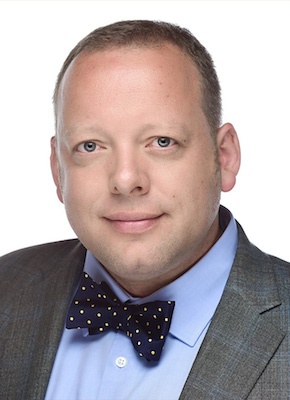
For this Faculty Feature, we highlighted Bernd Zinselmeyer, an Associate Professor in the Anatomic & Molecular Pathology Division.
Tell us about your background. Where did you grow up, and when did you first become interested in science and medicine?
I grew up in rural Germany on a farm, surrounded by animals, plants, forests, and nature from a very early age. Some of my earliest memories are of walking through the woods with my grandmother collecting mushrooms, long before I fully understood the biology behind them. Looking back, I think this early exposure to living systems shaped my curiosity profoundly.
Science was always present throughout my childhood – already in primary school and certainly throughout high school. I was fascinated by biology, plants, microscopy, and the idea that there were entire hidden worlds invisible to the naked eye. At the same time, I was also drawn to broader questions about life, meaning, and the human condition, which eventually led me for a period into Catholic theology and philosophy studies. For me, these interests never stood in opposition to science; rather, they were different ways of exploring complexity, living systems, and our place within them.
My interest in medicine became even more personal during my postdoctoral years at the NIH, when I had to undergo intensive chemotherapy for cancer. That experience gave me a deeper appreciation of medicine not only as a scientific discipline, but also as something that directly affects dignity, vulnerability, and hope. It also strengthened my interest in cancer biology and cancer immunology.
In that context, I am especially grateful that my current work allows me to collaborate on imaging experiments with colleagues in cancer immunology, including members of the Randolph and Schreiber laboratories. It feels meaningful to contribute imaging approaches that help visualize the complex interactions between immune cells and tumors and, in a small way, to the broader effort against cancer.
What is your career path?
My academic path has been somewhat unconventional and highly interdisciplinary. After high school, I initially studied Catholic theology and philosophy in the seminary. However, I soon realized that although I remained deeply interested in philosophy and broader questions about life and meaning, my true passion was in the natural sciences, especially biology.
I then transitioned into classical German biology studies with a strong focus on botany and zoology. Early on, I became especially fascinated by plants – not least because of a humorous comment from one of my theology professors, Dieter Hattrup, who held PhDs in mathematics, physics, and theology and enjoyed making gentle jokes about biologists. He once told me that biologists tend to think “a little more slowly,” and that plants might therefore suit me particularly well because, unlike animals, they would not run away while I was still trying to understand them. In retrospect, that advice may have shaped my early scientific direction more than either of us expected.
I later specialized in biochemistry, plant physiology, and mycology, with a growing interest in biologically active natural compounds and how molecules from nature can influence the nervous system, perception, and behavior.
One continuous thread through all these stages was microscopy. During botanical training courses, I became fascinated by the idea that hidden structures and biological processes could suddenly become visible through a lens. I later worked as an assistant in microscopy courses, and in many ways, microscopy has remained the central connecting element throughout my scientific career.
My early interests originally pointed toward neuroactive natural compounds and pharmaceutical sciences. However, through my increasing involvement with microscopy and imaging, my focus shifted toward intracellular trafficking and gene delivery. During my PhD work in pharmaceutical sciences, I investigated DNA- and lipid-based delivery systems and used microscopy to study how these complexes move through cells. This work also contributed to a patent in gene delivery.
My subsequent postdoctoral work brought me further into advanced biological imaging, intravital multiphoton microscopy, immunology, and later neuroimmunology and CNS imaging. Although the scientific questions have changed over the years – from plants and fungi to gene delivery, immunology, and neurobiology – microscopy has remained the consistent foundation throughout my career.
What are your favorite parts of your current role?
What I enjoy most is the collaborative nature of the work. I am fortunate to work with colleagues across many different fields, developing imaging strategies, optimizing technologies, and occasionally even building microscope systems from scratch.
I also find it deeply rewarding to advise students, postdocs, and colleagues on imaging questions – especially when a technical discussion helps them see their own science in a new way, sometimes quite literally.
What is a memorable moment you’ve had while working in the department?
As far as I can remember – and admittedly my recollection is somewhat hazy – one of the most memorable moments was during an Immunology Retreat in Bloomington, Illinois. At the evening party in what was probably the town’s only dance club, I apparently managed to accidentally trigger the fire alarm, resulting in the entire club being evacuated.
For a more complete, and perhaps more accurate, reconstruction of the events, you would probably have to contact Melanie Relich.
What special skills or talents do you have that people may not know about?
While living in Germany, I was an active beekeeper focusing on honeybee queen breeding through Germany’s island mating programs, where isolated locations allow for controlled mating with selected drone lines. Although I no longer keep bees in the United States, I hope to return to this passion in retirement.
During the COVID pandemic, I rekindled my interest in mushroom cultivation, carrying out the entire process from spore isolation and agar culture to grain spawn production, substrate preparation, and fruiting.
What are some of your favorite hobbies or activities?
I enjoy almost anything outdoors, including foraging for mushrooms, observing reptiles, walking in nature, and fishing. When the foraging is successful, I especially enjoy bringing those finds into the kitchen and pairing the final result with a good bottle of something fermented.
What is your advice to aspiring people in your field?
Find what you truly enjoy, not only what you are good at. The things you genuinely care about are often the ones that become most rewarding and give you the energy to become excellent.
At the same time, be prepared to do some work you may not enjoy as much, because that often provides the resources, stability, and opportunities needed to pursue what you really love.