For more detailed information or to order testing, visit the Clinical Genomics Laboratory website.
Overview
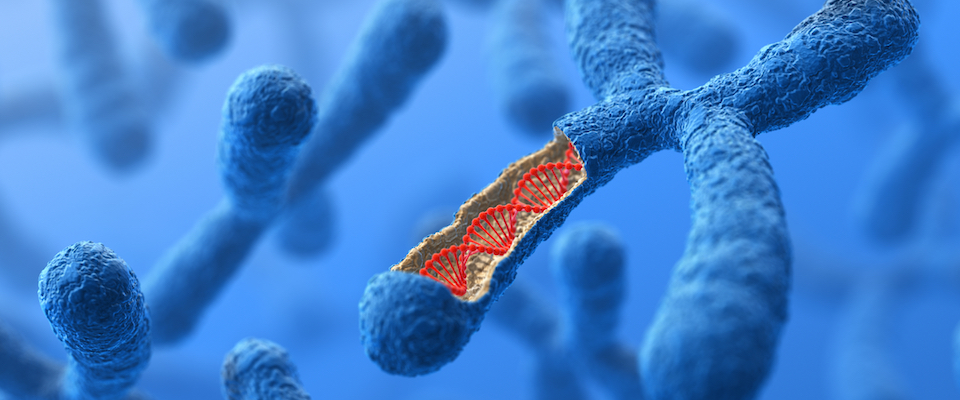
Washington University’s Clinical Genomics Laboratory provides quality care with expert genomic services from chromosome to base pair. The lab’s professional team is fully equipped with a state-of-the-art facility to assist with prenatal, constitutional and oncological disease testing.
Though certified by the Clinical Laboratory Improvement ACT (CLIA) and the College of American Pathologists (CAP), the team provides shorter turnaround times, more automation technology and finer test resolutions than what is typically available.
View the CAP license and CLIA certificate.
Services
Washington University’s Clinical Genomics Laboratory offers a comprehensive range of services for a variety of disease areas. Testing is supported by highly trained professionals, which include Washington University faculty, technicians and administrative staff. The laboratory strives to provide physicians with the best and most accurate information while keeping turnaround times low. A summary of study areas and the types of testing are listed below.
| Chromosome analysis | CMA | FISH | FFPE FISH | |
| Prenatal | ✔ | ✔ | ✔ | |
| POC | ✔ | ✔ | ||
| Constitutional | ✔ | ✔ | ✔ | |
| Cancer | ✔ | ✔ | ✔ |
Contact
Front desk phone: 314-454-8101 | Lab phone: 314-362-2258
On-call pager: 314-407-0269 | Fax: 314-454-5192
Email: cytogenetics@path.wustl.edu | Web: Clinical Genomics Laboratory
Hours of operation: 8 a.m. to 5:30 p.m. CST, Monday-Friday
After hours: Please leave a voicemail at 314-454-8101
For urgent matters, please page the lab manager or the lab supervisor at 314-407-0269.